Last week I wrote about the roughly 40 million Americans who started college and never finished. This week I want to look at the moment that decides whether many of them come back: the transfer credit evaluation.
Every returning student asks the same question before they fill out an application. Will I have to start over?
The honest answer at most institutions is "partly." Not because the student did not learn anything, but because of how evaluation works.
How a transcript gets evaluated
Transfer evaluation is still largely a manual job. Someone in the registrar's office reads the incoming transcript, looks up each course in the sending school's catalog, compares descriptions, sometimes asks for a syllabus, and decides whether it matches something in the receiving school's requirements. That takes time. Weeks is normal. And every step depends on the evaluator recognizing what they are looking at.
So evaluators do what any of us do under time pressure. They lean on what they know.
English Composition. College Algebra. Introductory Psychology. Courses like these have been evaluated thousands of times, the equivalencies are already written down, and the credit goes through. Anything less familiar gets flagged for review, deferred, or quietly denied. That is one reason the Government Accountability Office found that students who transfer lose, on average, an estimated 43 percent of the credits they have earned.
The map of what counts
It helps to draw the problem.
Put every kind of learning a student might arrive with on one map. Left to right, run from learning that is unfamiliar to the receiving institution to learning that is well understood. Top to bottom, run from academic coursework to experiential learning: workplace training, military schools, licenses, certifications, apprenticeships.
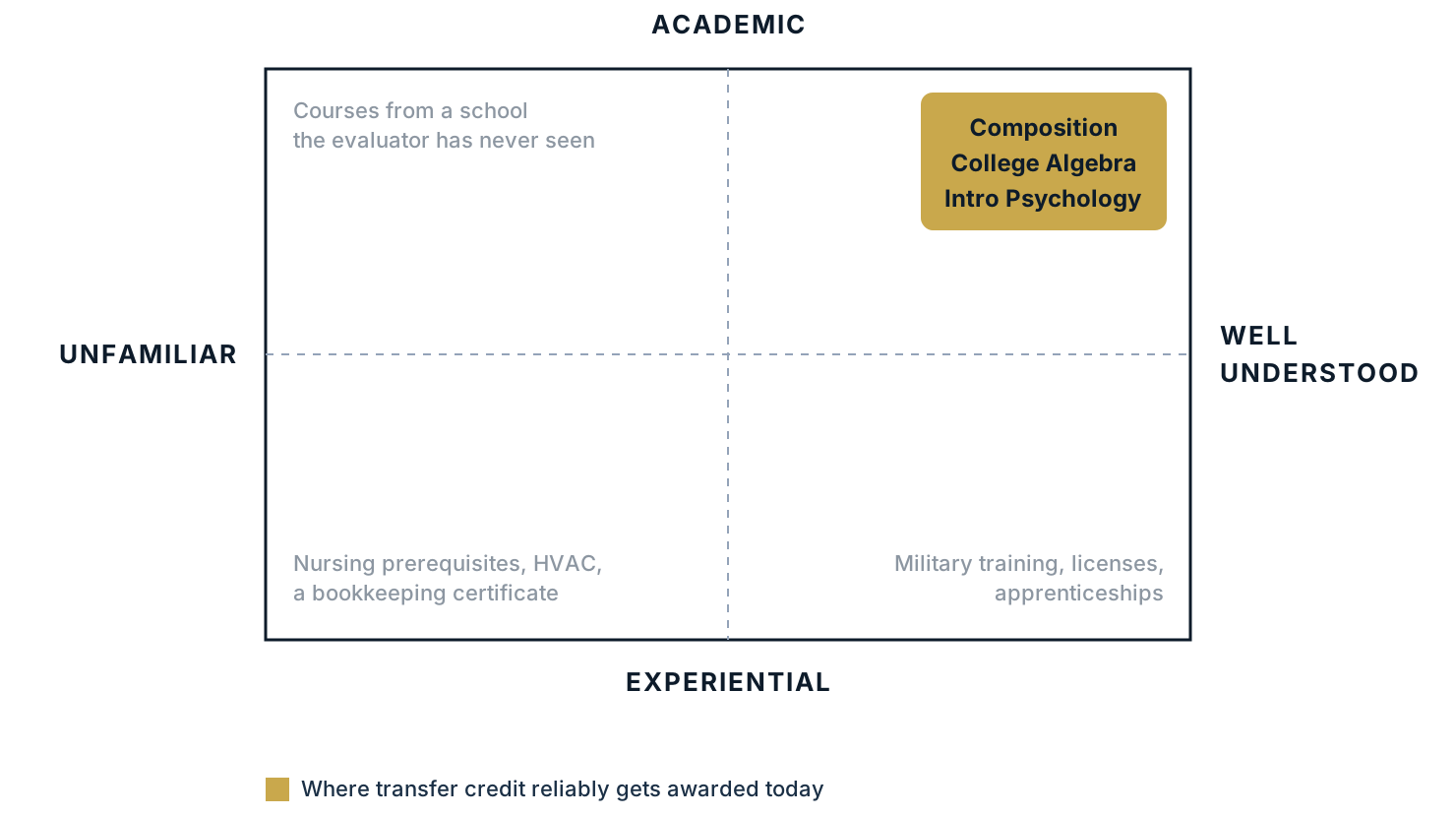
The credit that reliably transfers lives in one small corner: academic and well understood. Familiar courses from familiar schools.
Everything else is where returning students actually live. The nursing prerequisite from a community college the evaluator has never heard of. The associate degree in HVAC. The Army medic training. The bookkeeping certificate. The three semesters at a college that has since closed. Real learning, often paid for, that never gets counted because nobody has the time to figure out what it is.
What changes when you can see the whole map
This is the part of the problem we set out to solve with TCEvaluator.
The platform reads a transcript and matches each course against a reference library of millions of courses from thousands of institutions, from Ivy League universities to community colleges to trade schools, alongside the published credit recommendations for military training, certifications, and licenses. Then it applies the receiving institution's own transfer policies and produces a recommendation for a human evaluator to review.
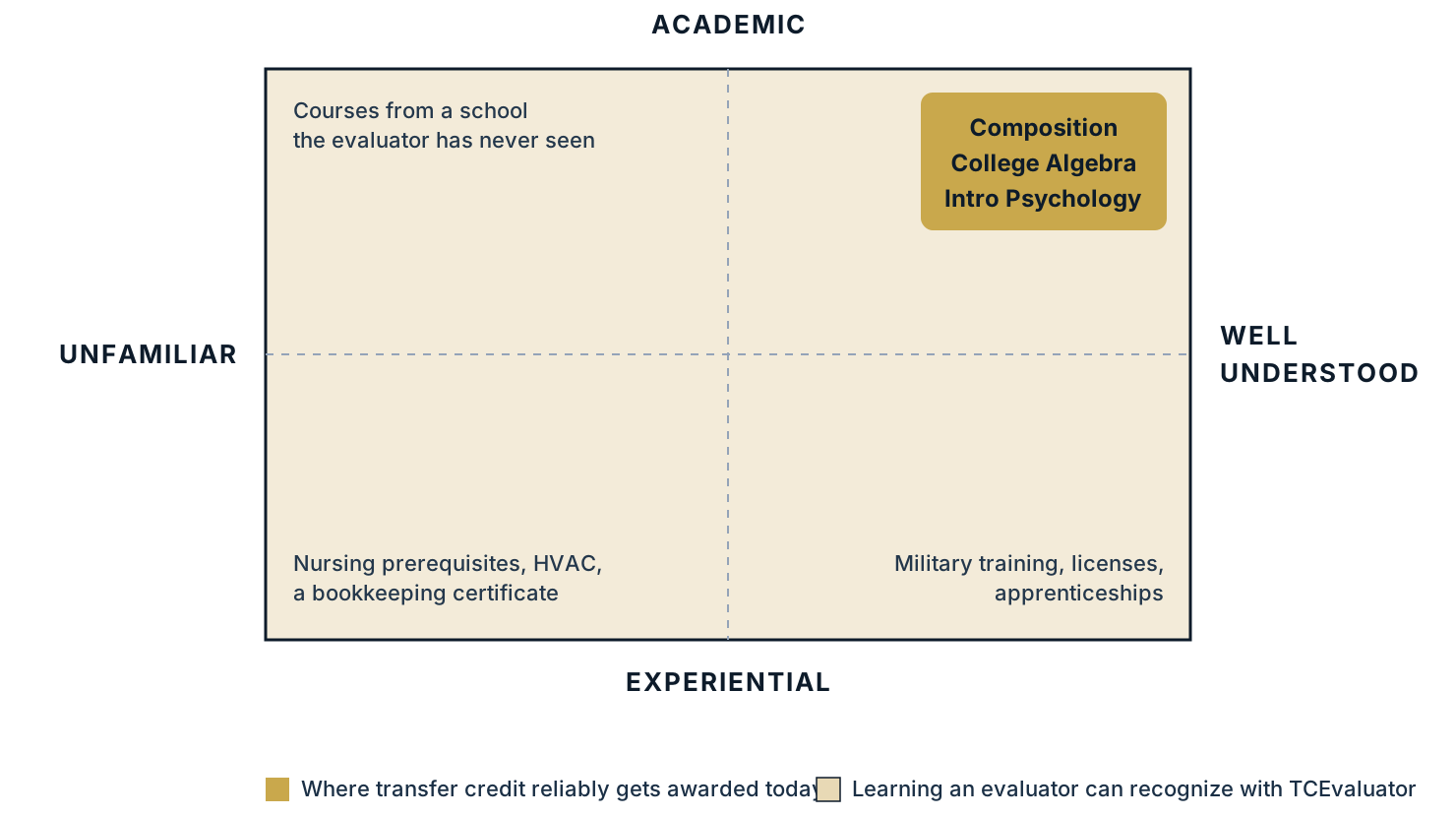
The evaluator is still the evaluator. What changes is that "I have never seen this course before" stops being a reason to deny it. The unfamiliar course from the unfamiliar school gets looked up, compared, and either credited or declined on its merits, in minutes rather than weeks.
For a returning student, that is the difference between hearing "we'll let you know in three weeks" and seeing, before they apply, a realistic picture of how much of their past work counts.
Why this matters more than it sounds
Roughly a third of college students transfer at least once. Add the 40 million who stopped out and are deciding whether to return, and transfer evaluation is not an administrative detail. It is one of the main gates to a degree.
Every credit that goes unrecognized is a course the student pays for twice, a semester added to their timeline, and one more reason to give up. Every credit that is fairly recognized is the opposite.
Colleges do not need to lower their standards to fix this. They need to be able to see the whole map. That is what we built TCEvaluator to do.