
I have spent the last couple of months writing about the roughly 40 million Americans who started college and never finished. Inside that number is a group I think about a lot, and today I want to give them their own post: the people who served.
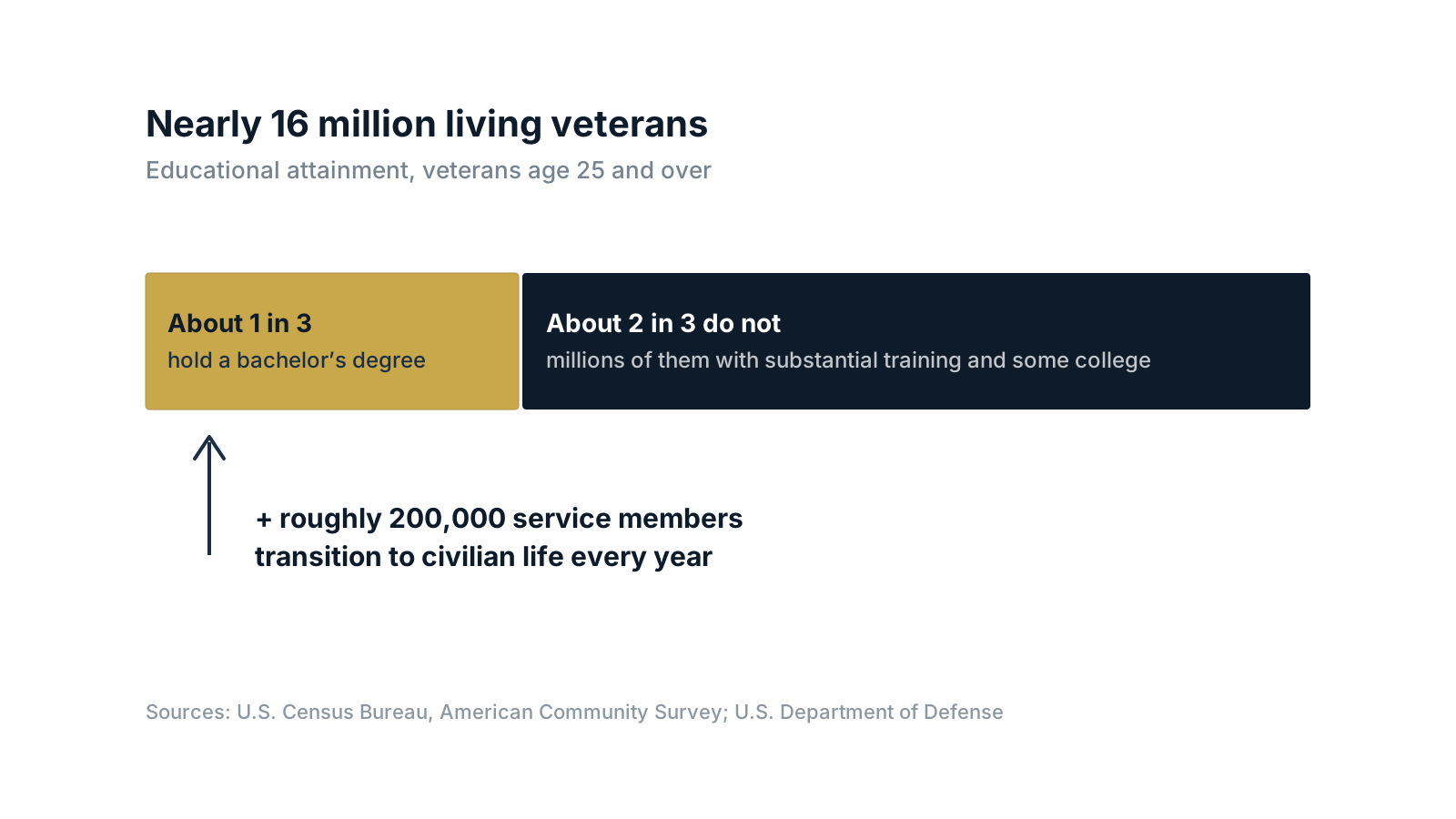
There are nearly 16 million veterans in the United States, and roughly 200,000 more service members take off the uniform every year. Census data says only about a third of veterans over 25 hold a bachelor's degree. That leaves millions of people walking around with years of serious training and no credential that says so.
The best-documented learning in America
Here is the part most people outside higher education do not know. Military learning is not a mystery box. It may be the best-documented learning in the country.
Every soldier, sailor, Marine, and Coast Guardsman can request a Joint Services Transcript, for free. It lists the schools they attended, the courses they completed, and the occupations they held. Airmen and Guardians get theirs from the Community College of the Air Force, which is not a figure of speech. It is an actual accredited college inside the Air Force.
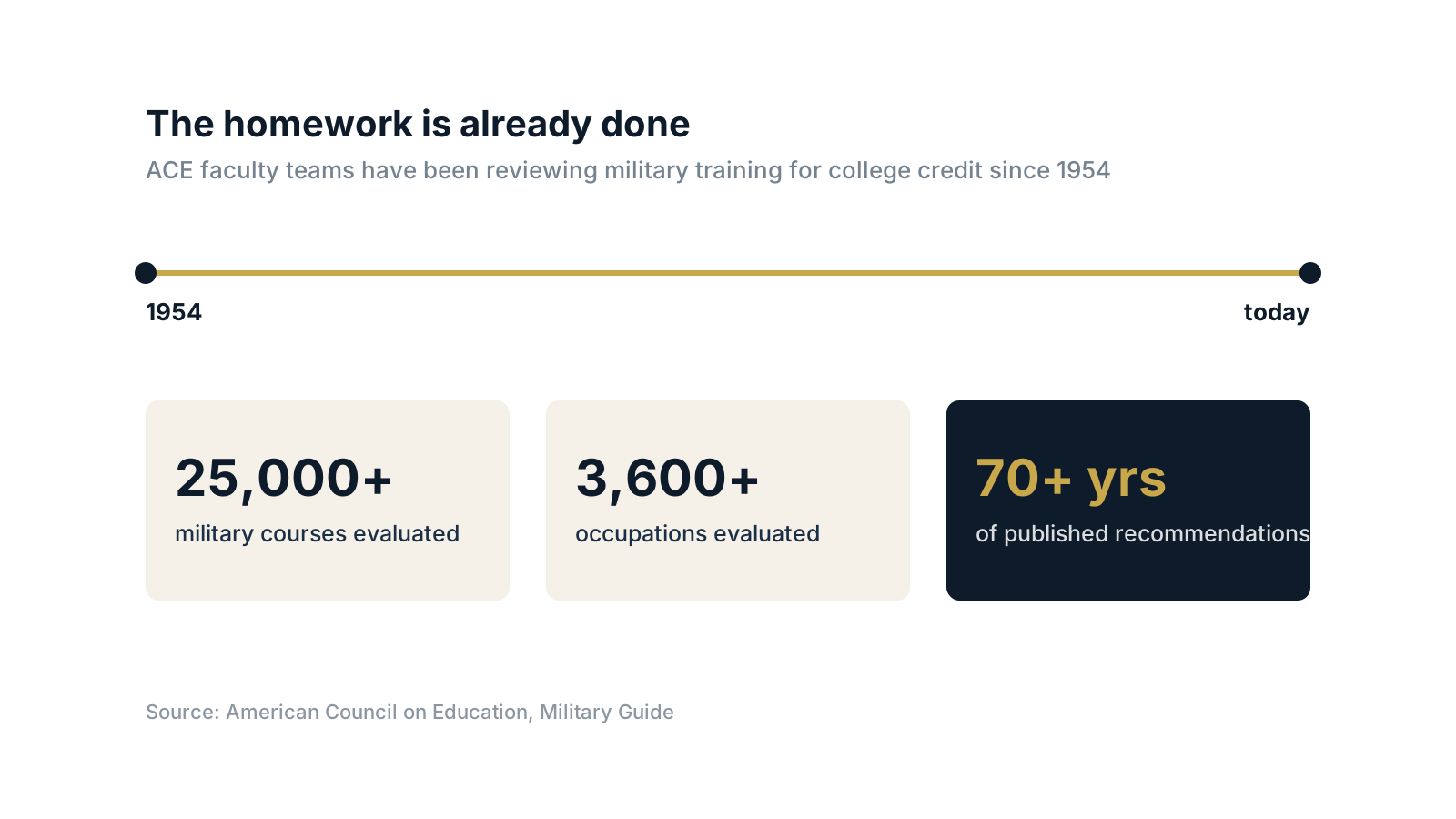
And the remarkable part: much of that transcript arrives already evaluated. Since 1954, the American Council on Education has been sending faculty teams to review military training the same way they would review a college course. The public ACE Military Guide now carries credit recommendations for more than 25,000 military courses and 3,600 occupations. Semester hours, course level, subject area, all published.
No other group of students shows up with anything like this. The adult learner with a decade of workplace experience has to fight to get any of it assessed. The veteran arrives with the assessment in hand.
So what actually happens
Ask a veteran what came of their JST and you will hear some version of the same story. A physical education waiver for basic training. A handful of elective credits that count toward nothing in particular. Start with English Comp like everyone else.
It is not malice, and mostly it is not policy either. It is the same recognition problem that hurts every transfer student, only worse. A transcript line that says Health Care Specialist with an ACE recommendation attached still needs a person at the receiving college to decide what it equals in their catalog. That person has a stack of files, a few minutes per course, and no familiarity with military course codes. Unfamiliar gets deferred, and deferred quietly becomes denied. The Government Accountability Office estimates transfer students in general lose about 43 percent of their credits. Veterans start from further outside the evaluator's comfort zone than almost anyone.
Running a health sciences college, the example that stays with me is the medic. An Army combat medic or a Navy corpsman finishes their service with clinical training and patient-care hours that took years to accumulate, documented and credit-recommended. Then they enroll somewhere and get asked to start from zero, in a field that is desperate for exactly those people.
The data exists. The workflow does not.
This is the part that trips up even well-intentioned institutions, so let me be precise about it. A credit recommendation is not an equivalency. The Military Guide will tell you a course is worth, say, three semester hours of lower-division credit in a subject area. It will not tell you what that equals in your catalog, whether it satisfies a requirement in your nursing program or disappears into free electives, or how your own transfer and residency policies apply to it. Someone at your institution still has to work all of that out.
And working it out is genuinely tedious. The Guide is searched one entry at a time. Military courses come in versions, so the right recommendation depends on when the service member actually took the training, which means matching entries against the dates on the transcript. Every decision has to be reconciled with your catalog and your degree requirements, and then documented well enough to survive an audit. Now multiply that by a JST with a dozen lines, and by every veteran in your applicant pool. The research took seventy years. Using it, by hand, takes long enough that at most institutions it simply does not happen.
The opportunity
For veterans, the math is simple. Every recommended credit that actually lands is a course they do not pay for twice and a semester sooner they are working in their field.
For colleges, I would put it more bluntly. Nearly 16 million people, two-thirds of them without a four-year degree, most with documented, pre-evaluated learning and education benefits they earned. If you are an enrollment leader wondering where the students went, some of them are right here, waiting to find out whether you will count what they already know.
The evaluation work was done decades ago. What has been missing is the connection between seventy years of published recommendations and the person in the registrar's office with a few minutes to make a call.
This is one of the problems TCEvaluator was built to solve, and I want to be clear that it is not a roadmap slide. It works today. The platform reads a JST or a CCAF transcript the same way it reads any other transcript, and matches it against a reference library of millions of unique courses from thousands of institutions. The ACE credit recommendations are already inside the system, alongside the college's own catalog and its own transfer policies, so every line of military training gets looked up and mapped to what it equals at that institution. The evaluator gets a recommendation for each course in minutes, reviews it, and makes the call. Their standards, their policies, their decision. Just with the seventy years of homework finally visible.
It is the part of our work I find easiest to explain. Someone spent four years serving the country and learned a profession while they did it. Counting that learning fairly should not be the hard part, and with the right tools, it no longer is.
If your institution serves veterans, or wants to, here is a simple test. Look at what happens to a JST when it hits your transfer office today. Time it. Then bring us that same transcript and watch what an evaluator can do when every one of those 25,000 evaluated courses is visible. That conversation takes half an hour, and for the veterans in your applicant pool, it might be the most useful half hour you spend this year.